Foresight, otherwise known as Strategic Foresight to make it sound more…strategic…is pretty much what it sounds like – looking forward into the future. Many organizations think they are doing this already, but in fact most of them aren’t, at least not in a way that leads to real future-readiness. This is not a critique, it’s simply an observation: most organizations are focused (rightly) on the present and the near-term future (0-3 years, sometimes 0-5) for a wide variety of good reasons.
Most obviously, the present is where we live; it’s what confronts us every day when we wake up. We have to deal with today’s challenges – and often yesterday’s as well – and by the time 5 o’clock comes around, that’s it! No time for worrying about things that could happen someday. Simply put, nobody at the organization really has looking further out into the future as part of their everyday job.
There’s an important thing to remember though: more established organizations than yours have been blindsided by things they could have seen coming if only they had taken the time to look, to say nothing of the countless missed opportunities to pivot into something great. Fortunately, it doesn’t take much time or money at all to do just that.
Beyond Strategic Planning
Many leaders reading this are thinking, “But we have a strategic plan!” That’s true, and that’s great! Some organizations, especially those who operate a lot of infrastructure and/or equipment, even have a longer-term plan (20-50 years or more) to ensure adequate capital improvement funding for new assets and life-cycle replacement of existing assets.
However, neither the traditional five-year strategic plan nor the life-cycle asset management plan is designed to consider potential impacts to the organization in a structured way. Because we don’t have a process for considering what could or likely will happen in areas that seem outside of our control, we take the approach of, “We’ll cross that bridge when we come to it.”
Often this feels sufficient, because when we get there, the bridge is open and ready to cross, and it leads to a place we want to go. But those aren’t the times we’re worried about. We are looking out for the times when the bridge is out – it’s closed for repairs, it’s been crashed into by a tanker, it’s a drawbridge and it’s up for a whole day, maybe it doesn’t really look safe to cross – or worse yet – we realize that it’s a bridge to nowhere, because we’ve been traveling on autopilot and failed to reset the navigation to a place we really wanted to go. By the time any of these realizations occur, it’s too late; the damage is done, or the opportunity has passed.
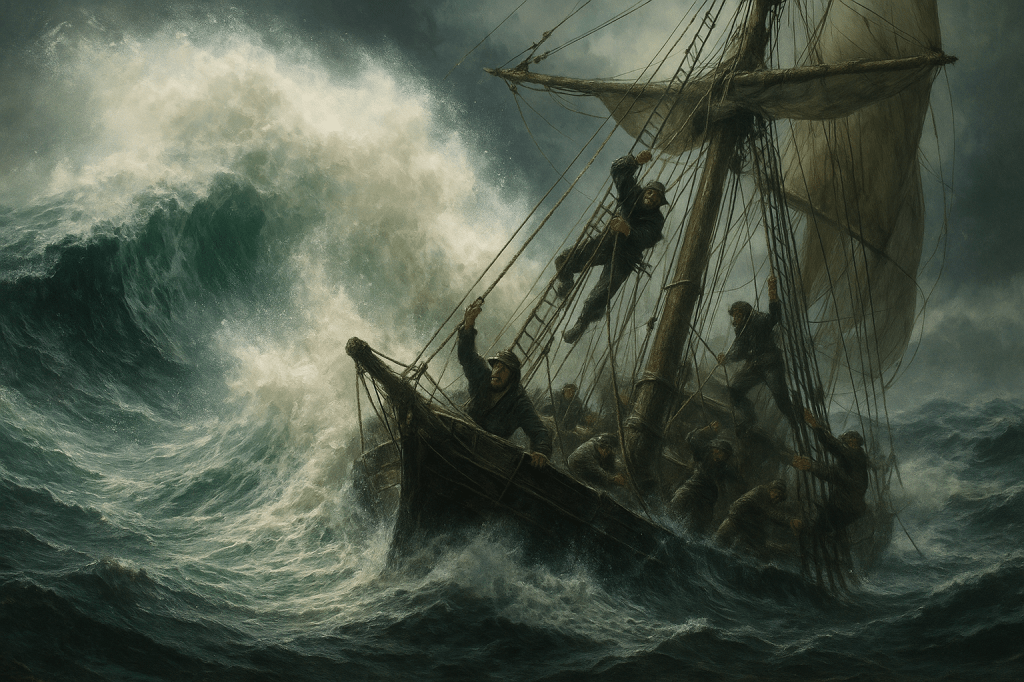
These are the often-forseeable targets of Foresight. We are looking to spot the rogue wave before it capsizes the ship, to help steer around the storms in the distance, and we are looking out periodically to make sure we are still on track to our intended destination. Occasionally we’ll spot an island on the horizon that looks even more enticing than the place we thought we were going, and we’ll decide to change course. But we can’t know that island is out there unless we are looking.
Step 1: Horizon Watch
Foresight is being up in the crow’s nest of the ship with a spyglass, scanning the horizon (hence the name Horizon Watch for the first step of our three-step Foresight process). On a real ship this is often done alone, partly because there’s only room up there for one sailor, but also because it just doesn’t need a whole crew (like the galley or the rigging might). But someone must be looking out, in all directions, all the time. Because the rogue wave could hit from any side. The storm could approach from any direction. The New World could appear at any time.
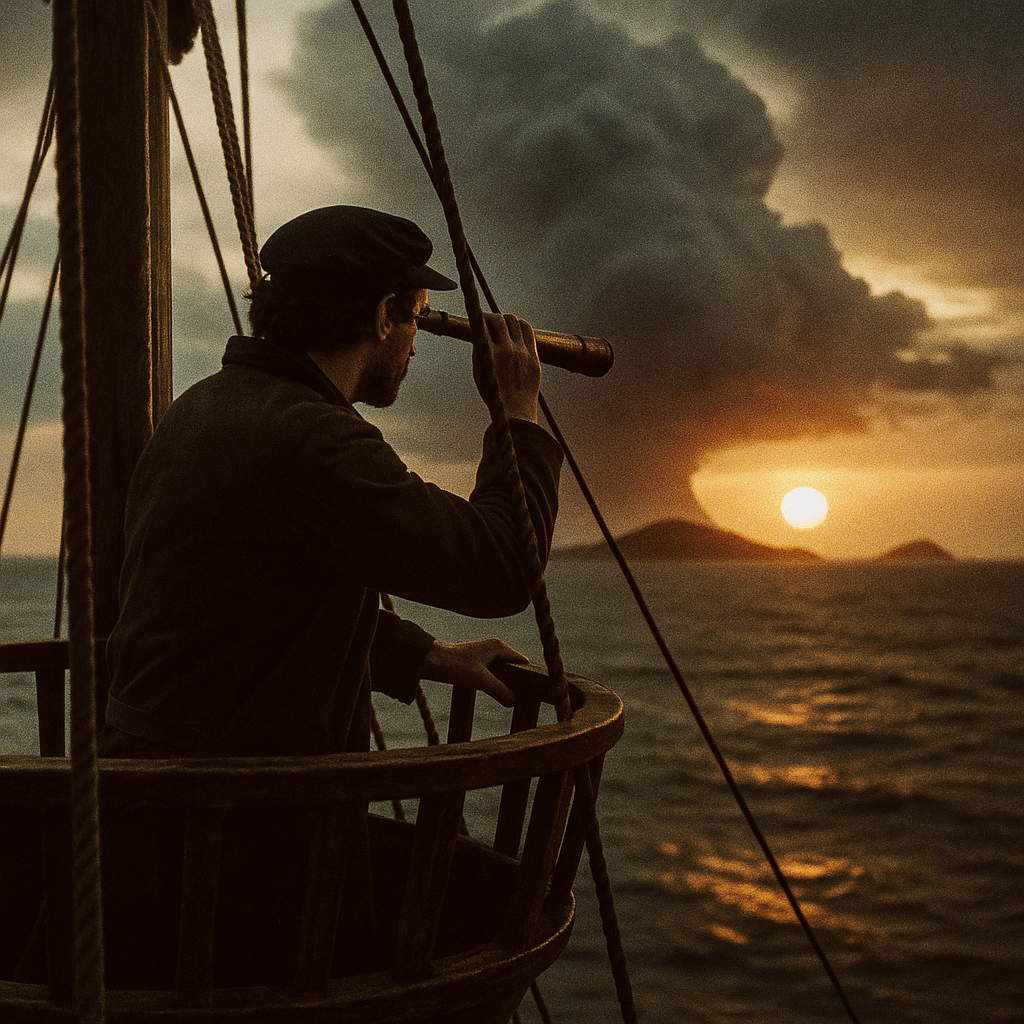
Horizon Foresight is your on-call lookout in the crow’s nest. We are as lean and efficient as possible, because the job doesn’t require a large team, especially in this day and age where we can leverage technology like AI to scan the horizon quickly and accurately. But it does demand experience, vision, and impeccable judgment to know both what you’re looking for as well as what to do about it. After all, nobody wants to alarm the captain unless it’s absolutely necessary.
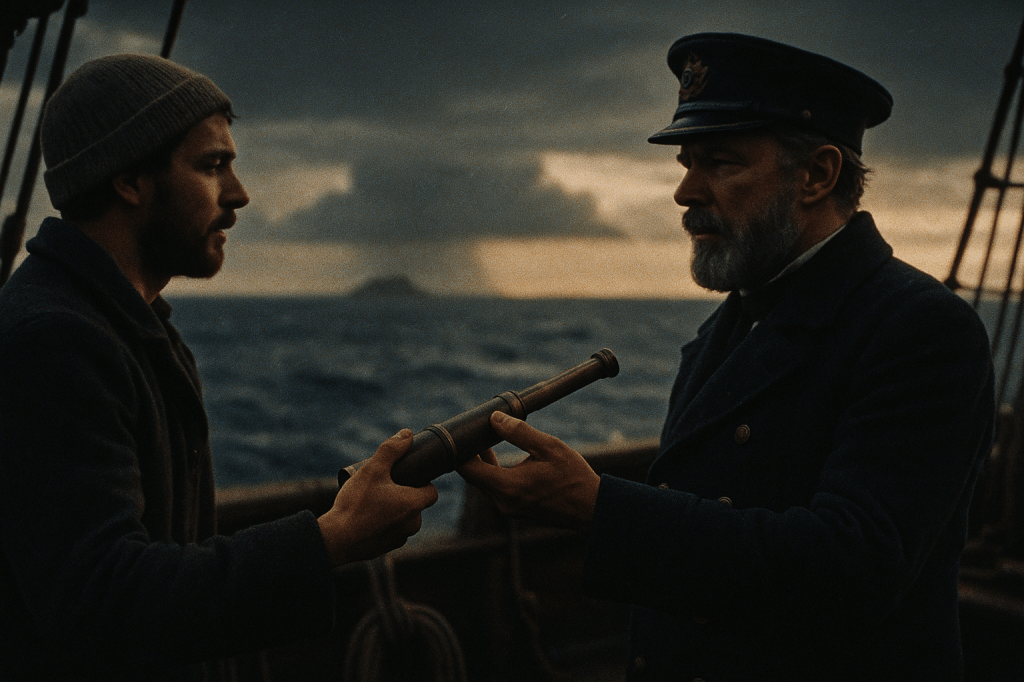
This is where steps two and three of our three-step process come in: Future Lens (interpreting the data with compelling future scenarios) and Waypoint (planning how to get where you want to be). On a ship the lookout can simply hand the captain the spyglass and let them see what’s on the horizon for themselves. In the modern world however, when the sea we’re sailing on is time, this is a little more nuanced, but it doesn’t have to be difficult.
Step 2: Future Lens
Future Lens, Horizon Foresight’s unique, storytelling approach to scenario planning, is the modern equivalent of handing the captain the spyglass. Using tools like generative AI audio and video to weave the sometimes-complex layers of trends analysis from step one, Horizon Watch, into coherent, engaging narratives about possible futures for the organization, Future Lens gives leaders and stakeholders a visceral sense of what the future might hold in a way that drives action through cultivating urgency.
This is a key tenant of change management, and something that is made much more effective (not to mention cheaper) with the advent of near-Hollywood-quality AI audio/video tools. What would have previously required a series of multi-day workshops and meticulously crafted content, at great expense, can now be produced almost overnight and presented in a compelling five-minute video that can be screened and discussed during a routine leadership meeting.
Step 3: Waypoint
Once the stakeholders have a good feel for the futures they want to pursue (and avoid), the final step of Horizon’s three-step process is Waypoint – how do we get there? The back-casting approach looks for the major steppingstones along the path to the future you desire (critical investments, decision points, known influences like elections, financial or technological milestones, and more) and gives your organization clear, simple line items to inject into its existing strategic planning and operations.
These give everyone confidence that your organization is Future-Ready, has a clear sense of what’s urgent to act on and what is not, and has left no stone unturned in its’ examination of relevant future influences. The future is fluid, of course, and this process can be easily updated as necessary to make sure that you’re always taking action today based on a current and relevant view of tomorrow.
The goal of foresight is not prediction; it is the confidence that comes with preparation. Our simple three-step process will give your team the insight it needs to make better decisions today, as well as the skills to stay Future-Ready for years to come.
I wish I could say that the Foresight process is much more complex than this and that I’ve had to leave a lot out that we’ll get to when I’m putting together a complicated and expensive proposal for you. Fortunately for you, that’s not the case. This really is all there is to it. Even for a large organization, our process of looking thoughtfully into the future and acting on it confidently in the present really is remarkably simple.
The whole process can usually be done in less than a month and for much less money and staff time than a typical five-year strategic planning update. You can take as many of the three steps as you want, and we have clear, competitively priced packages for however far you want to go (and you can always take one step at a time). Regardless of how much you take on, you’ll be surprised how quick, easy, and effective it was.
Step 0: Contact us.
If this sounds intriguing to you (and I don’t blame you, it’s pretty great, and actually a lot of fun), send me a message. I can work remotely with your organization anywhere in the world. I’m genuinely excited to get to know your team and give you the opportunity to go brag to your competitors about how Future-Ready you are while your clients slam the like button on the sweet future scenarios video that you post on social media (I forgot to mention it can double as a marketing tool!).
Thanks for your time and your interest. Welcome to your future! It feels good to be prepared.
Sincerely,
Jon Villines
Chief Lookout
Horizon Foresight
AI was not utilized in the generation of the text found in this post.
AI was utilized in the creation of images and graphics found in this post.
 Horizon Foresight
Leave a comment